<?xml version="1.0" encoding="utf-8"?>
<feed version="0.3" xmlns="http://purl.org/atom/ns#" xmlns:dc="http://purl.org/dc/elements/1.1/" xml:lang="en">
<title>MedMemoWeb</title>
<link rel="alternate" type="text/html" href="http://www.medmemoweb.com/" />
<modified>2006-09-25T22:59:02Z</modified>
<tagline></tagline>
<id>tag:www.medmemoweb.com,2006://1</id>
<generator url="http://www.movabletype.org/" version="3.2">Movable Type</generator>
<copyright>Copyright (c) 2006, mmw</copyright>
<entry>
<title>Antinuclear antibody patterns</title>
<link rel="alternate" type="text/html" href="http://www.medmemoweb.com/archives/2006/09/antinuclear_ant_1.html" />
<modified>2006-09-25T22:59:02Z</modified>
<issued>2006-09-25T22:58:34Z</issued>
<id>tag:www.medmemoweb.com,2006://1.20</id>
<created>2006-09-25T22:58:34Z</created>
<summary type="text/plain"></summary>
<author>
<name>mmw</name>

<email>info@medmemoweb.com</email>
</author>
<dc:subject>Rheumatology</dc:subject>
<content type="text/html" mode="escaped" xml:lang="en" xml:base="http://www.medmemoweb.com/">

<![CDATA[<p><img alt="ANA-pattern-ready.gif" src="http://www.medmemoweb.com/ANA-pattern-ready.gif" width="300" height="407" /><br />
</p>]]>
</content>
</entry>
<entry>
<title>Quinolones</title>
<link rel="alternate" type="text/html" href="http://www.medmemoweb.com/archives/2006/09/quinolones_1.html" />
<modified>2006-10-05T21:15:49Z</modified>
<issued>2006-09-18T03:09:54Z</issued>
<id>tag:www.medmemoweb.com,2006://1.19</id>
<created>2006-09-18T03:09:54Z</created>
<summary type="text/plain">MECHANISM OF ACTION • Bactericidal • Inhibit bacterial DNA gyrase, topoisomerase IV, and two type II DNA topoisomerase enzymes • For many gram-positive bacteria (such as S. aureus), topoisomerase IV is the primary activity inhibited by the quinolone (see gyrating...</summary>
<author>
<name>mmw</name>

<email>info@medmemoweb.com</email>
</author>
<dc:subject>Pharmacology</dc:subject>
<content type="text/html" mode="escaped" xml:lang="en" xml:base="http://www.medmemoweb.com/">
<![CDATA[<p>MECHANISM OF ACTION</p>

<p>•	Bactericidal<br />
•	Inhibit bacterial DNA gyrase, topoisomerase IV, and two type II DNA topoisomerase enzymes<br />
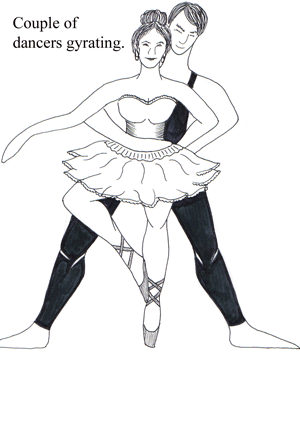
•	For many gram-positive bacteria (such as S. aureus), topoisomerase IV is the primary activity inhibited by the quinolone (see gyrating dancers below)<br />
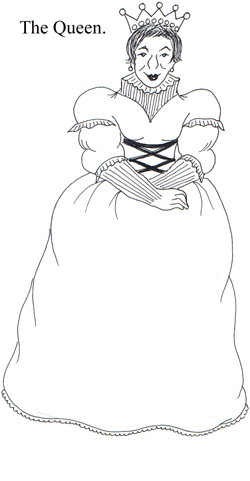
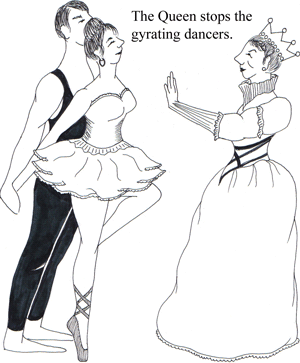
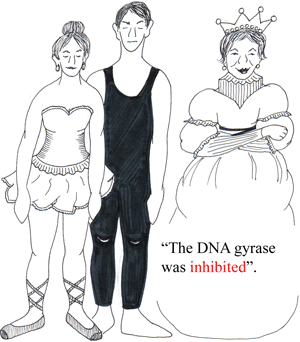
•	For many gram-negative bacteria (such as E. coli), DNA gyrase is the primary activity inhibited by the quinolone (see "queen" below stopping the gyrating dancers)<br />
</p>]]>
<![CDATA[<p>ABSORPTION/EXCRETION</p>

<p>•	Quinolones are well absorbed after oral administration and are distributed widely in body tissues<br />
•	Bioavailability: for the fluoroquinolones  it is greater than 50% for all agents and greater than 95% for several<br />
•	Volume of distribution: (high) The concentrations of quinolones in urine, kidney, lung and prostate tissue, stool, bile, and macrophages and neutrophils are higher than serum levels.  Quinolone concentrations in cerebrospinal fluid, bone, and prostatic fluid are lower than in serum.<br />
•	Excretion: Most quinolones are cleared predominantly by the kidney, and dosages must be adjusted for renal failure.   However, pefloxacin and moxifloxacin are metabolized predominantly by the liver and should not be used in patients with hepatic failure.</p>

<p><img alt="Quinolone-ready-1.gif" src="http://www.medmemoweb.com/Quinolone-ready-1.gif" width="250" height="481" /><br />
ANTIMICROBIAL SPECTRUM<br />
•	bactericidal against: E. coli and various species of Salmonella, Shigella, Enterobacter, Campylobacter, and Neisseria<br />
•	Third generation fluoroquinolones : levofloxacin, moxifloxacin, and gatifloxacin. They possess antibacterial activity against Chlamydia, Legionella, and Mycoplasma species, streptococcal, staphylococcal pathogens, and variable activity against E. faecalis</p>

<p>THERAPEUTIC USES<br />
•	Prostatitis: Norfloxacin, ciprofloxacin, and ofloxacin<br />
•	Sexually Transmitted Diseases: activity in vitro against N. gonorrhoeae, C. trachomatis, and H. ducreyi<br />
•	Gastrointestinal infections: traveler's diarrhea (frequently caused by enterotoxigenic E. coli)<br />
•	Respiratory infections: Community acquired/atypical pneumonia ;  gatifloxacin and moxifloxacin have activity against S. pneumoniae. Quinolones also have in vitro activity against the rest of the commonly recognized respiratory pathogens, including H. influenzae, Moraxella catarrhalis, S. aureus, M. pneumoniae, Chlamydia pneumoniae, and Legionella pneumophila<br />
•	Other infections: Ciprofloxacin received wide usage for the prophylaxis of anthrax and has been shown to be effective for the treatment of tularemia<br />
•	Urinary Tract Infection</p>

<p><img alt="Quinolone-ready-2.gif" src="http://www.medmemoweb.com/Quinolone-ready-2.gif" width="300" height="432" /><img alt="Quinolone-ready-3.gif" src="http://www.medmemoweb.com/Quinolone-ready-3.gif" width="300" height="363" /><img alt="Quinolone-ready-4.gif" src="http://www.medmemoweb.com/Quinolone-ready-4.gif" width="300" height="342" /></p>

<p>ADVERSE REACTIONS</p>

<p>•	Gastrointestinal: mild nausea, vomiting, and/or abdominal discomfort (3% to 17% of patients).<br />
•	CNS: mild headache and dizziness (0.9% to 11% of patients)<br />
•	Dermatology: Rashes; photosensitivity reactions<br />
•	Achilles tendon rupture or tendonitis (rare)<br />
•	Cardiac: QTc interval (QT interval corrected for heart rate) prolongation has been observed with sparfloxacin and to a lesser extent with gatifloxacin and moxifloxacin<br />
•	Endocrine: hypoglycemia has been reported in diabetic patients receiving insulin or glyburide plus fluoroquinolones</p>]]>
</content>
</entry>
<entry>
<title>Cogan&apos;s Syndrome</title>
<link rel="alternate" type="text/html" href="http://www.medmemoweb.com/archives/2006/09/cogans_disease.html" />
<modified>2006-09-16T23:38:42Z</modified>
<issued>2006-09-14T02:36:58Z</issued>
<id>tag:www.medmemoweb.com,2006://1.18</id>
<created>2006-09-14T02:36:58Z</created>
<summary type="text/plain">DISEASE OVERVIEW • combination of inflammatory eye disease and vestibuloauditory dysfunction • rare autoimmune disorder affecting the inner ear • described as Meniere&apos;s-like fluctuating hearing loss combined with impaired caloric response • young adults commonly affected • As many as...</summary>
<author>
<name>mmw</name>

<email>info@medmemoweb.com</email>
</author>
<dc:subject>Neurology</dc:subject>
<content type="text/html" mode="escaped" xml:lang="en" xml:base="http://www.medmemoweb.com/">
<![CDATA[<p>DISEASE OVERVIEW</p>

<p>•	combination of inflammatory eye disease and vestibuloauditory dysfunction<br />
•	rare autoimmune disorder affecting the inner ear<br />
•	described as Meniere's-like fluctuating hearing loss combined with impaired caloric response<br />
•	young adults commonly affected<br />
•	As many as 15% of CS patients have a large- to medium-vessel vasculitis<br />
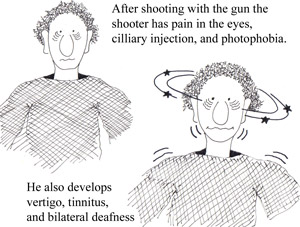
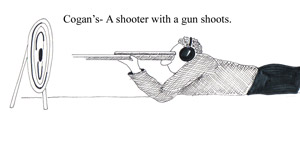
•	As a helpful mnemonic device think of a man shooting a gun (rhymes with 'gan' in Cogan’s; see the side effects the shooter experiences in the figures below) <br />
</p>]]>
<![CDATA[<p><br />
<img alt="Cogan's-ready-1.jpg" src="http://www.medmemoweb.com/archives/Cogan%27s-ready-1.jpg" width="300" height="142" /><br />
SIGNS / SYMPTOMS</p>

<p>•	acute nonsyphilitic interstitial keratitis<br />
•	sensorineural hearing loss (see figure 3 below)<br />
•	Medium- and large-vessel arteritis (aortitis, aortic regurgitation, coronary artery inflammation, mesenteric vasculitis,  and limb claudication)<br />
•	severe vertigo (see figure 3 below)<br />
•	nausea/ vomiting<br />
•	tinnitus<br />
•	diarrhea and/or bloody stools (10% patients with CS)</p>

<p><img alt="Cogan's-ready--2.jpg" src="http://www.medmemoweb.com/Cogan%27s-ready--2.jpg" width="300" height="227" /></p>

<p>DIAGNOSIS<br />
•	clinical suspicion (make sure to consider more common diseases before committing to a diagnosis of CS)</p>

<p><br />
TREATMENT<br />
•	systemic corticosteroids for inner ear disease (high doses) <br />
•	topical steroids for interstitial keratitis<br />
•	cytotoxic agents for cases refractory to corticosteroids<br />
</p>]]>
</content>
</entry>
<entry>
<title>Guillain Barre Syndrome</title>
<link rel="alternate" type="text/html" href="http://www.medmemoweb.com/archives/2006/09/guillain_barre_1.html" />
<modified>2006-09-14T00:22:37Z</modified>
<issued>2006-09-12T02:29:30Z</issued>
<id>tag:www.medmemoweb.com,2006://1.17</id>
<created>2006-09-12T02:29:30Z</created>
<summary type="text/plain">DISEASE OVERVIEW • Group of autoimmune syndromes consisting of demyelinating and acute axonal degenerating forms of the disease • Rapidly evolving polyradiculoneuropathy preceded by a triggering event, most often an infection • Incidence: 1 to 3 per 100,000 persons annually...</summary>
<author>
<name>mmw</name>

<email>info@medmemoweb.com</email>
</author>
<dc:subject>Neurology</dc:subject>
<content type="text/html" mode="escaped" xml:lang="en" xml:base="http://www.medmemoweb.com/">
<![CDATA[<p>DISEASE OVERVIEW<br />
•	Group of autoimmune syndromes consisting of demyelinating and acute axonal degenerating forms of the disease<br />
•	Rapidly evolving polyradiculoneuropathy preceded by a triggering event, most often an infection<br />
•	Incidence: 1 to 3 per 100,000 persons annually<br />
•	Campylobacteriosis is the most common precipitant in GBS<br />
•	Influenza vaccine is associated with a risk of 1-2 cases GBS per 1 Million</p>]]>
<![CDATA[<p>SIGNS/SYMPTOMS <br />
•	Progressive, symmetric neurologic symptoms<br />
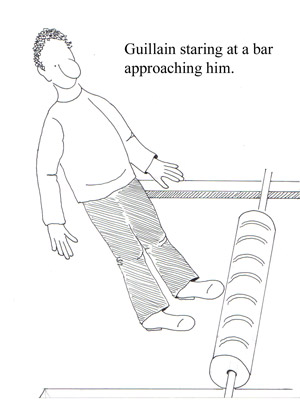
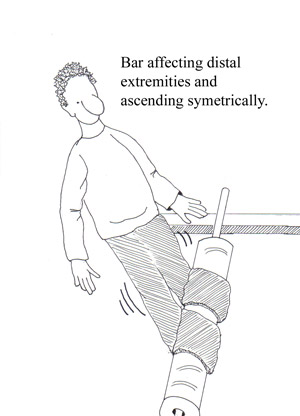
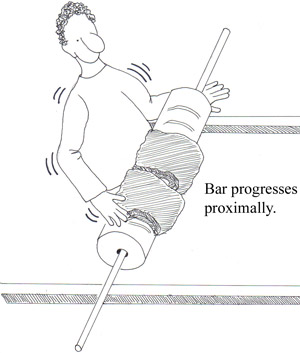
•	Weakness (proximal muscles; legs more often than arms) see figures below<br />
•	Tingling dysesthesias (extremities)<br />
•	Paresthesias  (spread proximally) see figures below<br />
•	Disappearance of deep tendon reflexes (within the first few days of symptom onset)<br />
•	Cranial nerve involvement may affect airway maintenance, facial muscles, eye movements, and swallowing<br />
•	Pain (shoulder girdle, back, and posterior thighs) See fig 3 below</p>

<p><br />
<img alt="GB-1-ready.jpg" src="http://www.medmemoweb.com/GB-1-ready.jpg" width="300" height="416" /><img alt="GB-2--ready.jpg" src="http://www.medmemoweb.com/GB-2--ready.jpg" width="300" height="416" /><img alt="GB-3-ready.jpg" src="http://www.medmemoweb.com/GB-3-ready.jpg" width="300" height="353" /></p>

<p>DIAGNOSIS<br />
•	a definitive diagnosis is usually not possible until the fifth day after the onset of symptoms<br />
•	Clinical features: progressive weakness in both arms and legs; areflexia<br />
•	CSF findings: elevated protein (greater than 0.55 g / dL ) without pleocytosis<br />
•	Electrodiagnostic findings: an absent H reflex, low amplitude or absent sensory nerve action potentials, an abnormal F wave, and other less frequent abnormalities</p>

<p></p>

<p>TREATMENT<br />
•	All patients who have GBS should be admitted to a hospital for close observation for respiratory compromise, cranial nerve dysfunction, and autonomic instability<br />
•	Monitor lung function<br />
•	Physical therapy<br />
•	Pain control with narcotics along with carbamazepine or gabapentin<br />
•	High-dose intravenous immunoglobulin (IVIg; 400 mg per kg daily for five days)<br />
•	Plasmapheresis (five exchanges over five to eight days) OR IVIG</p>]]>
</content>
</entry>
<entry>
<title>Porphyria Cutanea Tarda</title>
<link rel="alternate" type="text/html" href="http://www.medmemoweb.com/archives/2006/08/porphyria_cutan_1.html" />
<modified>2006-08-23T19:56:47Z</modified>
<issued>2006-08-17T03:34:59Z</issued>
<id>tag:www.medmemoweb.com,2006://1.16</id>
<created>2006-08-17T03:34:59Z</created>
<summary type="text/plain">DISEASE OVERVIEW • Porphyrias: a group of diseases caused by inborn enzymatic defects in the heme biosynthetic pathway • Most common type of porphyria is PCT • PCT results from a deficiency of hepatic uroporphyrinogen decarboxylase activity • Acquired and...</summary>
<author>
<name>mmw</name>

<email>info@medmemoweb.com</email>
</author>
<dc:subject>Dermatology</dc:subject>
<content type="text/html" mode="escaped" xml:lang="en" xml:base="http://www.medmemoweb.com/">
<![CDATA[<p>DISEASE OVERVIEW</p>

<p>•	Porphyrias: a group of diseases caused by inborn enzymatic defects in the heme biosynthetic pathway<br />
•	Most common type of porphyria is PCT<br />
•	PCT results from a deficiency of hepatic uroporphyrinogen decarboxylase activity<br />
•	Acquired and Familial forms exist<br />
o	Acquired PCT: most often precipitated by alcohol, Estrogens, oral contraceptives, certain environmental pollutants, and iron overloading with accompanying genetic factors<br />
o	Familial PCT: autosomal dominant<br />
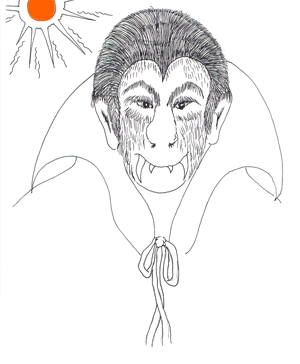
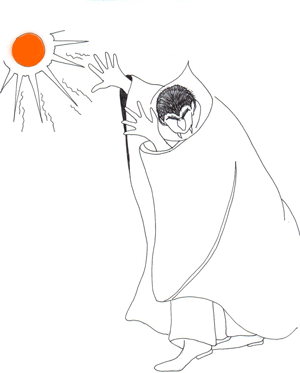
•	Aside: PCT has been suggested in some of the vampire and werewolf legends, hence the character below<br />
</p>]]>
<![CDATA[<p><img alt="Porphyria-cutanea-tarda-PDF.gif" src="http://www.medmemoweb.com/Porphyria-cutanea-tarda-PDF.gif" width="300" height="364" /><br />
SIGNS and SYMPTOMS</p>

<p>•	Blistering in sun exposed areas (caused by the generation of peroxide by the UV excited porphyrins)  <br />
•	Increased skin fragility <br />
•	Facial hypertrichosis (see all figures)<br />
•	Hyperpigmentation<br />
•	Sclerodermoid changes<br />
•	Dystrophic calcification with ulceration</p>

<p>DIAGNOSIS</p>

<p>•	“Port-wine urine”:  red-brown discoloration due to high levels of porphyrin pigments<br />
•	Urine with a bright pink fluorescence under a Wood's light<br />
•	Elevated urine uroporphyrin: coproporhyrin ratio- a ratio of 4:1 or more <br />
•	Quantitative assays of the various porphyrins must be performed to obtain a reliable diagnosis<br />
•	Biopsy specimens for direct immunofluorescence are taken from the edge of lesions</p>

<p><img alt="Porphyria-cutanea-tarda.rea.gif" src="http://www.medmemoweb.com/Porphyria-cutanea-tarda.rea.gif" width="300" height="373" /></p>

<p>TREATMENT<br />
•	Phlebotomy: iron removal because iron overload is one of the triggers of the disease. One unit of blood should be removed every 2 to 4 weeks until the hemoglobin drops to 10mirogm/dl or until the serum iron drops to 50micromg/dl.</p>]]>
</content>
</entry>
<entry>
<title>Cholesterol lowering drugs</title>
<link rel="alternate" type="text/html" href="http://www.medmemoweb.com/archives/2006/08/cholesterol_low_1.html" />
<modified>2006-08-15T16:50:29Z</modified>
<issued>2006-08-12T02:39:23Z</issued>
<id>tag:www.medmemoweb.com,2006://1.15</id>
<created>2006-08-12T02:39:23Z</created>
<summary type="text/plain">Cholesterol treatment guidlines: Current guidelines for cholesterol treatment: http://www.nhlbi.nih.gov/guidelines/cholesterol/profmats.htm Drug Treatment: There are four major classes of medications are used to treat hyperlipidemia: o HMG-CoA reductase inhibitors (statins) o Bile acid sequestrants (cholestyramine, cholestipol) o Nicotinic acid o Fibric acids...</summary>
<author>
<name>mmw</name>

<email>info@medmemoweb.com</email>
</author>
<dc:subject>Pharmacology</dc:subject>
<content type="text/html" mode="escaped" xml:lang="en" xml:base="http://www.medmemoweb.com/">
<![CDATA[<p>Cholesterol treatment guidlines:</p>

<p>Current guidelines for cholesterol treatment: <a href="http://www.nhlbi.nih.gov/guidelines/cholesterol/profmats.htm">http://www.nhlbi.nih.gov/guidelines/cholesterol/profmats.htm</a></p>

<p>Drug Treatment:</p>

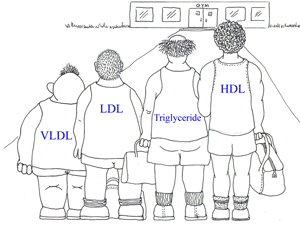
<p>There are four major classes of medications are used to treat hyperlipidemia:<br />
o	HMG-CoA reductase inhibitors (statins) <br />
o	Bile acid sequestrants (cholestyramine, cholestipol)<br />
o	Nicotinic acid <br />
o	Fibric acids <br />
</p>]]>
<![CDATA[<p><br />
<img alt="Cholest-Meds1-ready.gif" src="http://www.medmemoweb.com/Cholest-Meds1-ready.gif" width="300" height="281" /><img alt="Cholest-Meds-2-ready.gif" src="http://www.medmemoweb.com/archives/Cholest-Meds-2-ready.gif" width="300" height="215" /></p>

<p><br />
<img alt="Cholest-Meds-3-ready.gif" src="http://www.medmemoweb.com/Cholest-Meds-3-ready.gif" width="300" height="225" /></p>

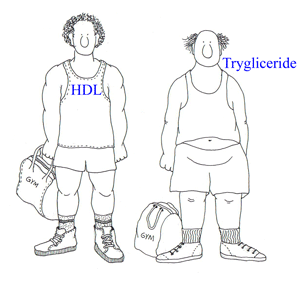
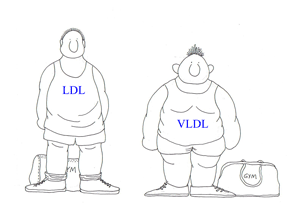
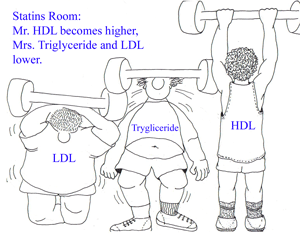
<p>o  The statins can lower LDL levels by 18% to 55% and triglyceride levels by 7% to 30%. They also can raise HDL levels by 5% to 15%.Their major side effects include myopathy and an elevation of liver enzyme levels. </p>
<p><br />
<img alt="Cholest-Meds-4-ready.gif" src="http://www.medmemoweb.com/Cholest-Meds-4-ready.gif" width="300" height="236" /></p>

<p><br />
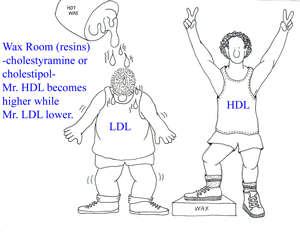
o  The bile acid resins (cholestyramine, cholestipol) lower LDL levels by 15% to 30%, and raise HDL levels by 3% to 5%. They have no effect on triglyceride levels. Their major side effects include gastrointestinal  distress, constipation, and a decrease in the absorption of other drugs.</p>

<p><br />
<img alt="Cholest-Meds-5-ready.gif" src="http://www.medmemoweb.com/Cholest-Meds-5-ready.gif" width="300" height="232" /></p>

<p><br />
o  Nicotinic acid lowers LDL levels by 5% to 25% and triglyceride levels by 20% to 50%. Nicotinic acid also raises HDL levels by 15% to 35%. The major side effects of nicotinic acid include flushing, hyperglycemia, hyperuricemia, GI distress, and hepatotoxicity.</p>

<p><br />
 <br />
o  Fibric acids lower LDL levels by 5% to 20% and triglyceride levels by 20% to 50%, and raise HDL levels by 10% to 20%. Their major side effects include dyspepsia, gallstones, myopathy, and unexplained noncardiac death. </p>

<p><br />
</p>]]>
</content>
</entry>
<entry>
<title>Hypertrophic Cardiomyopathy</title>
<link rel="alternate" type="text/html" href="http://www.medmemoweb.com/archives/2006/07/hypertrophic_ca.html" />
<modified>2006-08-08T19:39:52Z</modified>
<issued>2006-08-01T00:24:28Z</issued>
<id>tag:www.medmemoweb.com,2006://1.14</id>
<created>2006-08-01T00:24:28Z</created>
<summary type="text/plain">DISEASE OVERVIEW: o Hypertrophic cardiomyopathy (HCM) has classically been defined as hypertrophy of the myocardium greater than 1.5 cm without an identifiable cause. o The disorder has a variable presentation and carries a high incidence of sudden death....</summary>
<author>
<name>mmw</name>

<email>info@medmemoweb.com</email>
</author>
<dc:subject>Cardiovascular Medicine</dc:subject>
<content type="text/html" mode="escaped" xml:lang="en" xml:base="http://www.medmemoweb.com/">
<![CDATA[<p>DISEASE OVERVIEW:</p>

<p>o	Hypertrophic cardiomyopathy (HCM) has classically been defined as hypertrophy of the myocardium greater than 1.5 cm without an identifiable cause.<br />
o	The disorder has a variable presentation and carries a high incidence of sudden death. <br />
</p>]]>
<![CDATA[<p>Statistics: </p>

<p>o	The mortality rate for individuals with HCM is 4% per year. <br />
o	HCM is slightly more common in males than in females. <br />
o	HCM usually presents at an earlier age in females than in males. </p>

<p>Signs and Symptoms: </p>

<p>o	patients with HCM may be asymptomatic. <br />
o	symptoms of HCM can include sudden cardiac death <br />
o	dyspnea<br />
o	syncope<br />
o	presyncope <br />
o	angina<br />
o	palpitations<br />
o	orthopnea<br />
o	dyspnea<br />
o	congestive heart failure <br />
o	dizziness </p>

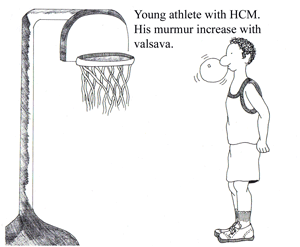
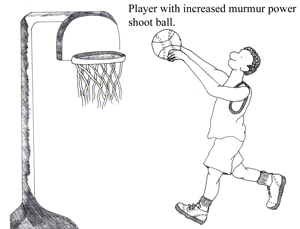
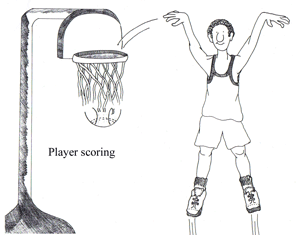
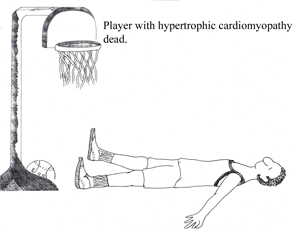
<p>Death often is sudden and unexpected and typically is associated with sports or vigorous exertion. (see young athlete at the figure)</p>

<p>Physical Findings:</p>

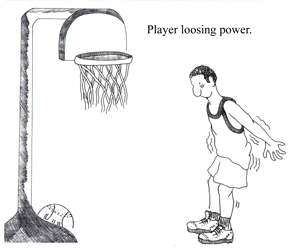
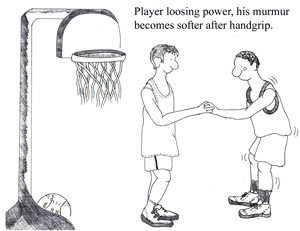
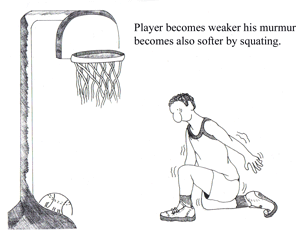
<p>o	The classic auscultatory finding for HCM is a crescendo-decrescendo systolic murmur along the left sternal border that increases with the Valsalva maneuver, (See the young athlete that is more powerfull while standing and with valsava maneuver, similarly squatting and hand grip decreases  his power and the intensity of his murmur).</p>

<p></p>

<p><img alt="HCM1-ready.gif" src="http://www.medmemoweb.com/HCM1-ready.gif" width="300" height="247" /><img alt="HCM2-ready.gif" src="http://www.medmemoweb.com/HCM2-ready.gif" width="300" height="229" /><img alt="HCM3-ready.gif" src="http://www.medmemoweb.com/archives/HCM3-ready.gif" width="300" height="235" /><img alt="HCM4-ready.gif" src="http://www.medmemoweb.com/HCM4-ready.gif" width="300" height="248" /><img alt="HCM-5-ready.gif" src="http://www.medmemoweb.com/HCM-5-ready.gif" width="300" height="231" /><img alt="HCM6-ready.gif" src="http://www.medmemoweb.com/HCM6-ready.gif" width="300" height="230" /><img alt="HCM7-ready.gif" src="http://www.medmemoweb.com/HCM7-ready.gif" width="300" height="232" /></p>

<p></p>

<p>Imaging Studies:<br />
 <br />
o	Two-dimensional echocardiography reveals LV hypertrophy and is diagnostic for HCM.</p>

<p>Procedures: </p>

<p>o	Cardiac catheterization<br />
o	Electrophysiology studies</p>

<p>Surgical Care: </p>

<p>o	Left ventricular myomectomy. <br />
o	Pacemaker implantation<br />
o	Catheter septal ablation<br />
o	Implantable cardioverter defibrillator</p>]]>
</content>
</entry>
<entry>
<title>Syringomyelia</title>
<link rel="alternate" type="text/html" href="http://www.medmemoweb.com/archives/2006/07/syringomyelia_1.html" />
<modified>2006-08-04T14:23:51Z</modified>
<issued>2006-07-30T23:28:09Z</issued>
<id>tag:www.medmemoweb.com,2006://1.13</id>
<created>2006-07-30T23:28:09Z</created>
<summary type="text/plain">DISEASE OVERVIEW Syringomyelia is a clinical syndrome created by a cavity which forms within the spinal cord resulting in the destruction of segmental neurons and long ascending and descending tracts passing through the involved spinal segments. The cavity which forms...</summary>
<author>
<name>mmw</name>

<email>info@medmemoweb.com</email>
</author>
<dc:subject>Neurology</dc:subject>
<content type="text/html" mode="escaped" xml:lang="en" xml:base="http://www.medmemoweb.com/">
<![CDATA[<p>DISEASE OVERVIEW<br />
 <br />
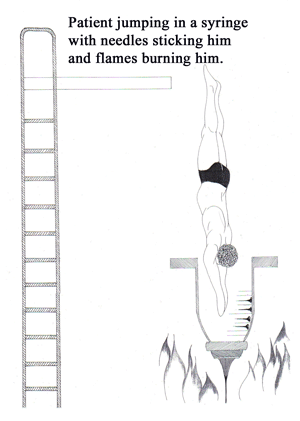
Syringomyelia is a clinical syndrome created by a cavity which forms within the spinal cord resulting in the destruction of segmental neurons and long ascending and descending tracts passing through the involved spinal segments.  The cavity which forms within the spinal column is called a syrinx (Gr: pipe).  A syrinx is cavity is like a pipe or syringe within the gray matter of the spinal column.  The two types of syringomyelia are hydromyelia (communicating) and posttraumatic syringomyelia (noncommunicating). The course is usually chronic and progressive.</p>]]>
<![CDATA[<p>TYPES</p>

<p>•	Posttraumatic: occurs in approximately 3% of patients with spinal cord injury</p>

<p><br />
SIGNS and SYMPTOMS<br />
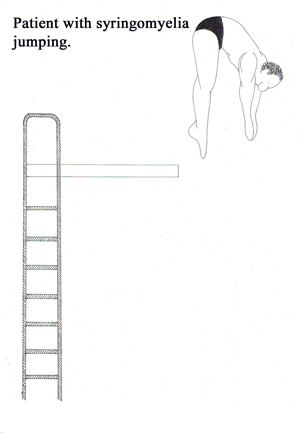
•	Symptoms usually begin in the hands and arms (note swimmer diving in hands first)* because of the involvement of the central lower cervical spinal cord.<br />
•	Hyporeflexia in upper extremities: due to destruction of the dorsal horn fibers from muscle stretch receptors<br />
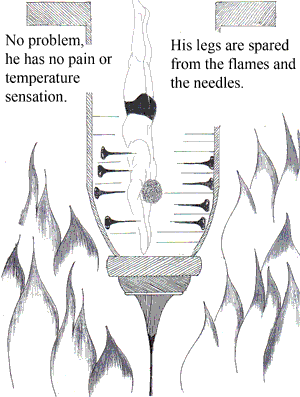
•	Loss of pain  and temperature perception (hands and arms): destruction of dorsal horn fibers from pain receptors<br />
•	Position, vibration, and touch sensation are usually preserved<br />
•	Upper extremity muscle weakness and atrophy: destruction of motor neurons and the anterior gray horns<br />
•	Lower extremity spastic weakness: occurs as long ascending and descending pathways are compressed by the expanding syrinx<br />
•	 As the syrinx increases in diameter, long ascending and descending pathways passing through the involved cord segment are compressed or invaded by the cavity and cause spastic weakness of the legs. Tracts to and from the sacral bladder centers are spared, or involved late in the disease, so that bladder symptoms occur late or not at all.<br />
•	Central neuropathic pain<br />
•	Headache and neck pain<br />
•	Autonomic symptoms (interruption of intermediaolateral column): Horner’s syndrome and trophic changes of the skin  </p>
<p></p>

<p><img alt="syringomyelia1-ready.gif" src="http://www.medmemoweb.com/syringomyelia1-ready.gif" width="300" height="433" /><img alt="syringomyelia-2-ready.gif" src="http://www.medmemoweb.com/syringomyelia-2-ready.gif" width="300" height="421" /><br />
<img alt="syringomyelia-3.gif" src="http://www.medmemoweb.com/syringomyelia-3.gif" width="300" height="397" /></p>

<p>DIAGNOSIS</p>

<p>•	Spinal MRI with contrast : reveals a central spinal cord cavity<br />
•	Electrophysiology: denervation in affected segments</p>

<p></p>

<p>TREATMENT<br />
•	Neurosurgical: Budd Chiari malformation – foramen magnum decompression<br />
Posttraumatic - shunt <br />
  </p>]]>
</content>
</entry>
<entry>
<title>Multiple Endocrine Neoplasia (MEN)</title>
<link rel="alternate" type="text/html" href="http://www.medmemoweb.com/archives/2006/07/multiple_endocr_1.html" />
<modified>2006-07-14T13:49:36Z</modified>
<issued>2006-07-10T20:16:24Z</issued>
<id>tag:www.medmemoweb.com,2006://1.10</id>
<created>2006-07-10T20:16:24Z</created>
<summary type="text/plain">Multiple Endicrine neoplasia: A group of heritable syndromes characterized by abherant growth of benign or malignant tumors in a subset of endocrine tissues. • Types o MEN I: tumors involving the parathyroid glands; endocrine pacreas; and the pituitary o MEN...</summary>
<author>
<name>mmw</name>

<email>info@medmemoweb.com</email>
</author>
<dc:subject>Endocrinology</dc:subject>
<content type="text/html" mode="escaped" xml:lang="en" xml:base="http://www.medmemoweb.com/">
<![CDATA[<p>Multiple Endicrine neoplasia:	A group of heritable syndromes characterized by abherant growth of benign or malignant tumors in a subset of endocrine tissues.</p>

<p>•	Types<br />
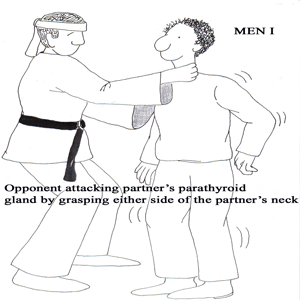
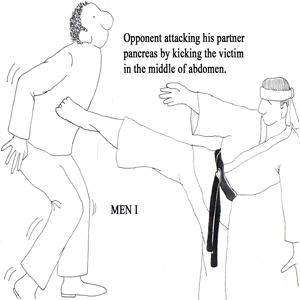
o	MEN I: tumors involving the parathyroid glands; endocrine pacreas; and the pituitary<br />
o	MEN IIA: medullary carcinoma of the thyroid gland; pheochromocytoma; and hyperparathyroidism<br />
o	MEN 2B: medullary carinoma of the thyroid; multiple neuromas; and pheochromocytoma</p>]]>
<![CDATA[<p><br />
MEN I (Wermer’s syndrome)</p>

<p>•	Autosomal dominant<br />
•	2-20/100,000<br />
•	features:<br />
o	hyperparathyroidism*<br />
o	enteropancreatic tumors (gastrinomas/Zollinger-Ellison syndrome; VIPomas; glucagonomas; insuilinomas)**<br />
o	pituitary adenomas (prolactinomas)***<br />
o	adrenal adenomas<br />
o	carcinoid tumors<br />
o	facial angiofibromas</p>

<p>*Note: Predator attacking victim’s parathyroid (hyperparathyroidism)gland by grasping either side of the victim’s neck<br />
**Note: Predator attacking the victim by kicking him to the abdomen inducing tumors.<br />
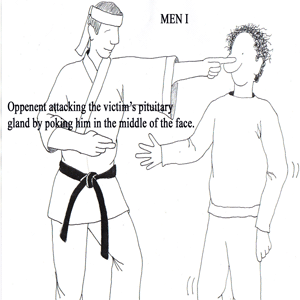
***Note: Predator attacking the victim’s pituitary gland  by poking the victim between his eyes inducing pituitary adenoma.</p>

<p><img alt="MEN1.2b.gif" src="http://www.medmemoweb.com/MEN1.2b.gif" width="300" height="300" /></p>

<p><img alt="MEN1.1b.gif" src="http://www.medmemoweb.com/MEN1.1b.gif" width="300" height="300" />  </p>

<p><img alt="MEN1.3b.gif" src="http://www.medmemoweb.com/MEN1.3b.gif" width="300" height="300" /></p>

<p></p>

<p><br />
	<br />
•	Symptoms are related to the respective tumors</p>

<p>•	Treatment<br />
o	Hyperparathyroidism<br />
•	Partial or total resection of parathyroid glands<br />
•	Prophylactic thymectomy<br />
o	Gastrinomas<br />
•	Proton pump inhibitors<br />
•	Correction of hypercalcemia</p>

<p>MEN II<br />
•	Autosominal dominant<br />
•	1-10/100,00</p>

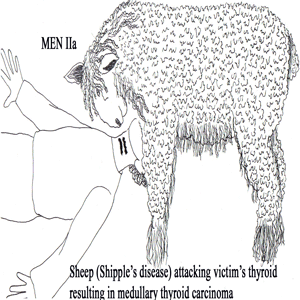
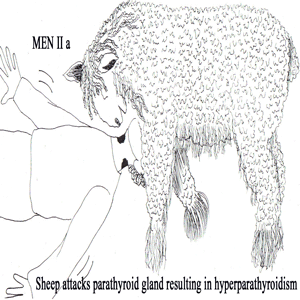
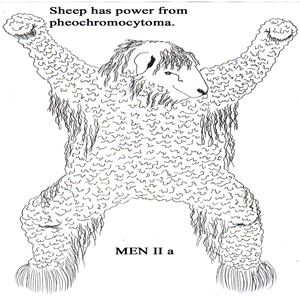
<p>MEN IIA (Sipple’s syndrome)-like sheep<br />
•	features<br />
o	medullary carcinoma of the thyroid (80-100%)*<br />
•	calcitonin producing parafollicular cells<br />
o	hyperparathyroidism**<br />
o	pheochromocytoma (50%)<br />
•	Hypertension; headache; palpitations; diaphoresis<br />
•	Super-strength demonstrated by the sheep after conquering the victim indicates the elevated catacholamines ***</p>

<p>o	Hirschsprung’s disease</p>

<p><br />
<img alt="MEN2.1.gif" src="http://www.medmemoweb.com/MEN2.1.gif" width="300" height="300" /> </p>

<p><br />
<img alt="MEN2.2.gif" src="http://www.medmemoweb.com/MEN2.2.gif" width="300" height="300" /></p>

<p>                    <br />
<img alt="MEN2.3.gif" src="http://www.medmemoweb.com/MEN2.3.gif" width="300" height="300" /></p>

<p></p>

<p><br />
*Note: Sheep attacking victim’s thyroid resulting in medullary thyroid carcinoma<br />
**Note: Sheep attacks parathyroid gland resulting in hyperparathyroidism<br />
***Note: Sheep has power after eating the very nutritional thyroid and parathyroid organs and develops pheochromocytoma</p>

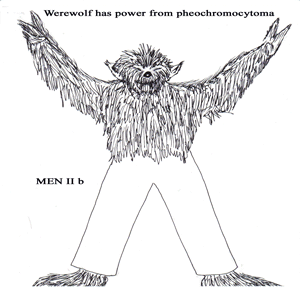
<p>MEN IIB (MEN III)<br />
•	Features<br />
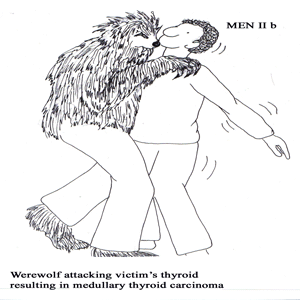
o	Medullary carcinoma of the thyroid*<br />
o	Pheochromocytoma**<br />
o	Marfanoid body habitus<br />
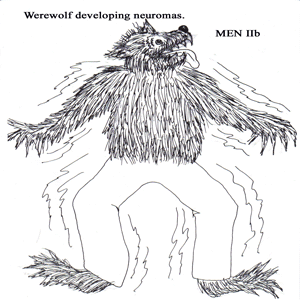
o	Multiple neuromas of the conjunctiva; lips; labia; tongue; mucosa; larynx*** </p>
<p><br />
<img alt="MEN2.b1.gif" src="http://www.medmemoweb.com/MEN2.b1.gif" width="300" height="300" /></p>

<p><img alt="MEN2.b2.gif" src="http://www.medmemoweb.com/MEN2.b2.gif" width="300" height="300" /></p>

<p><img alt="MEN2.b3.gif" src="http://www.medmemoweb.com/MEN2.b3.gif" width="300" height="300" /></p>

<p><br />
*Note: Werewolf attacking victim’s thyroid resulting in medullary thyroid carcinoma.<br />
**Note: Werewolf now becomes very powerfull immediatelly, and develops pheochromocytoma after eating the thyroid gland.<br />
***Note: Werewolf develops neuromas from all the energy produced from the pheochromocytoma.</p>

<p><br />
</p>]]>
</content>
</entry>
<entry>
<title>Still&apos;s disease</title>
<link rel="alternate" type="text/html" href="http://www.medmemoweb.com/archives/2006/05/stills_disease_1.html" />
<modified>2006-09-17T16:42:32Z</modified>
<issued>2006-05-30T18:16:27Z</issued>
<id>tag:www.medmemoweb.com,2006://1.9</id>
<created>2006-05-30T18:16:27Z</created>
<summary type="text/plain">DISEASE OVERVIEW • Still&apos;s disease is a form of arthritis that is characterized by high spiking fevers and transient salmon-colored rash. • First described in children, but it is now known to occur, much less commonly, in adults • Possible...</summary>
<author>
<name>mmw</name>

<email>info@medmemoweb.com</email>
</author>
<dc:subject>Rheumatology</dc:subject>
<content type="text/html" mode="escaped" xml:lang="en" xml:base="http://www.medmemoweb.com/">
<![CDATA[<p>DISEASE OVERVIEW</p>

<p>•	Still's disease is a form of arthritis that is characterized by high spiking fevers and transient <br />
        salmon-colored rash. <br />
•	First described in children, but it is now known to occur, much less commonly, in adults <br />
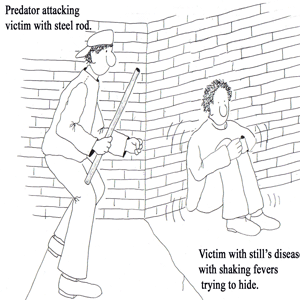
•	Possible Pathogenesis:  Infection; hypersensitivity; or autoimmune disorder</p>

<p><br />
</p>]]>
<![CDATA[<p>SIGNS and SYMPTOMS</p>

<p>•	Extreme fatigue<br />
•	Waves of high fever 104 degrees F (41 degrees C)<br />
•	Faint salmon color skin rash comes and goes usually doesn’t itch.<br />
•	Inflammation of the lungs (pleuritis)<br />
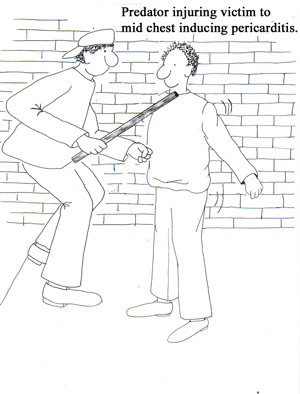
•	Inflammation of the pericardium (pericarditis)<br />
•	Fluid accumulation around the lung (pleural effusion)<br />
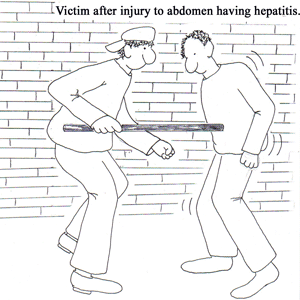
•	Inflammation of the liver<br />
•	Sore throat<br />
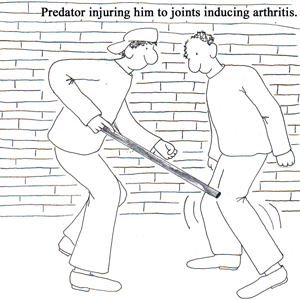
•	Arthritis this usually involves many joints (polyarticular arthritis).</p>

<p><br />
DIAGNOSIS</p>

<p>•	Persistent arthritis (arthritis lasting at least 6 weeks)<br />
•	Markedly elevated white blood cell count <br />
•	Low red blood count (anemia) <br />
•	Elevated ESR<br />
•	Rheumatoid arthritis (rheumatoid factor) and systemic lupus erythematosus (antinuclear antibodies, ANA) are usually negative. Other diseases especially infections, cancer, and other types of arthritis  are excluded </p>
<p><img alt="Still'sFIGURE1.gif" src="http://www.medmemoweb.com/Still%27sFIGURE1.gif" width="300" <br />
<img alt="stills-disease-ready-2.gif" src="http://www.medmemoweb.com/stills-disease-ready-2.gif" width="300" height="266" <img alt="Still'sFIGURE3.gif" src="http://www.medmemoweb.com/Still%27sFIGURE3.gif" width="300" height="300" /><img alt="Still'sFIGURE4.gif" src="http://www.medmemoweb.com/Still%27sFIGURE4.gif" width="300" height="300" /><img alt="Still'sFIGURE5.gif" src="http://www.medmemoweb.com/Still%27sFIGURE5.gif" width="300" height="300" /><img alt="Still'sFIGURE6.gif" src="http://www.medmemoweb.com/archives/Still%27sFIGURE6.gif" width="300" height="300" /></p>

<p></p>

<p></p>

<p></p>

<p></p>

<p></p>

<p></p>

<p></p>

<p></p>

<p>TREATMENT</p>

<p>•	Aspirin or other non-steroid drugs (NSAIDs)<br />
•	 Steroids such as prednisone, are used to treat more severe features of illness.<br />
•	Persistent illness: medications that affect the inflammatory aspects of the immune system are used. <br />
These include:<br />
•	Hydroxychloroquine (Plaquenil)<br />
•	Penicillamine<br />
•	Azathioprine (Imuran)<br />
•	Methotrexate (Rheumatrex)<br />
•	Cyclophosphamide <br />
•	Etanercept (Enbrel)<br />
•	Infliximad (Remicade)<br />
•	Corticosteroids</p>]]>
</content>
</entry>
<entry>
<title>Osteoarthritis</title>
<link rel="alternate" type="text/html" href="http://www.medmemoweb.com/archives/2006/02/osteoarthritis_1.html" />
<modified>2006-08-04T14:44:58Z</modified>
<issued>2006-02-10T01:54:58Z</issued>
<id>tag:www.medmemoweb.com,2006://1.8</id>
<created>2006-02-10T01:54:58Z</created>
<summary type="text/plain">DISEASE OVERVIEW • Osteoarthritis (OA ) is degenerative disease more common in older adults • Approximately one millon people affected • Morning stiffness less than 30 minutes • Pain exacerbated with movement • Rare systemic involvement...</summary>
<author>
<name>mmw</name>

<email>info@medmemoweb.com</email>
</author>
<dc:subject>Rheumatology</dc:subject>
<content type="text/html" mode="escaped" xml:lang="en" xml:base="http://www.medmemoweb.com/">
<![CDATA[<p>DISEASE OVERVIEW</p>

<p>•	Osteoarthritis (OA ) is degenerative disease more common in older adults<br />
•	Approximately one millon people affected<br />
•	Morning stiffness less than 30 minutes<br />
•	Pain exacerbated with movement<br />
•	Rare systemic involvement</p>]]>
<![CDATA[<p>DIAGNOSIS</p>

<p>•	Minimal joint inflammation<br />
•	Bony enlargement of the affected joint<br />
•	Pain and/or deformity  in the distal and proximal interphalangeal joints (DIP and PIP) <br />
         (see figures  1A and 1B)<br />
•	Radiographic findings: narrowing joint space; osteophyte formation; sharpened articular margins;   dense subchondral bone (absence of radiographic findings does not exclude the diagnosis)</p>

<p>SIGNS</p>

<p>•	Nodes: bony enlargements of the affected joints<br />
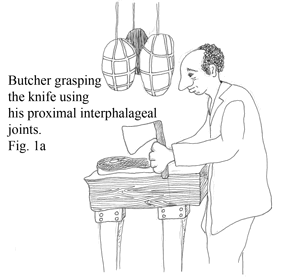
•	BOUCHARD nodes occur at the PIP joint (think of a BUTCHER grasping the knife using his PIP joint <br />
        as he chops meat; see Fig. 1A) <br />
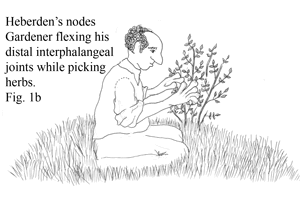
•	HEBERDEN nodes occur at the DIP joint (think of a gardener picking HERBS using his DIP joints)<br />
•	Limited range of motion<br />
•	Crepitus on motion</p>

<p><br />
<img alt="Buchards-nodes-2.gif" src="http://www.medmemoweb.com/Buchards-nodes-2.gif" width="300" height="278" /></p>

<p></p>

<p><br />
Heberden nodes occur at the DIP joint (Think of a gardener flexing his DIP joints while picking herbs)</p>

<p><img alt="Heberdens-nodes.gif" src="http://www.medmemoweb.com/Heberdens-nodes.gif" width="300" height="215" /></p>

<p></p>

<p>TREATMENT</p>

<p>•	Nonpharmacological: weight reduction; exercise; and joint protection. <br />
•	Initial pharmacological treatment: acetaminophen and capsaicin, (.025%) <br />
•	Moderate pain: Non steroidal anti-inflammatory agents (NSAIDS). <br />
•	Severe pain: steroid injections( ie.  40mg Triamcinolone)  into the most severely affected joint; <br />
        Hyaluronic acid-like product joint injections <br />
•	Surgical intervention: joint replacements for moderate to severe pain and functional impairment</p>

<p><br />
.</p>]]>
</content>
</entry>
<entry>
<title>VonRecklingenhausen Disease</title>
<link rel="alternate" type="text/html" href="http://www.medmemoweb.com/archives/2005/10/vonrecklingenha_1.html" />
<modified>2006-07-09T17:46:54Z</modified>
<issued>2005-10-05T23:21:21Z</issued>
<id>tag:www.medmemoweb.com,2005://1.7</id>
<created>2005-10-05T23:21:21Z</created>
<summary type="text/plain">HISTORICAL INFORMATION • 1793: Tilesius von Tilenau first described neurofibromatosis. • 1849: R. W. Smith further described it. • 1882: von Recklinghausen was the first person to associate the origin of this disorder to tumors arising from cells of the...</summary>
<author>
<name>mmw</name>

<email>info@medmemoweb.com</email>
</author>
<dc:subject>Internal Medicine</dc:subject>
<content type="text/html" mode="escaped" xml:lang="en" xml:base="http://www.medmemoweb.com/">
<![CDATA[<p>HISTORICAL INFORMATION</p>

<p>•	1793: Tilesius von Tilenau first described neurofibromatosis. <br />
•	1849: R. W. Smith further described it.<br />
•	1882: von Recklinghausen was the first person to associate the origin of this disorder to tumors <br />
         arising from cells of the nerve sheaths.<br />
•	1880s: Joseph Carey Merrick in London known as the “elephant man” because of his disfiguring <br />
         deformity of the head, extremities, and vertebral column.<br />
</p>]]>
<![CDATA[<p>DISEASE OVERVIEW<br />
•	Type 1 neurofibromatosis (NF1, von Recklinghausen disease, peripheral neurofibromatosis) is a  <br />
         multisystemic disease. <br />
•	autosomal dominant disorder; Chromosome 17 gene locus   <br />
        (17 letters in VonRecklingenhausen disease)<br />
•	1 in 4000 individuals are affected. </p>

<p><img alt="VonReckingenhausenReady1.gif" src="http://www.medmemoweb.com/VonReckingenhausenReady1.gif" width="250" height="250" /></p>

<p></p>

<p>DIAGNOSIS (2 or more of the following criteria)</p>

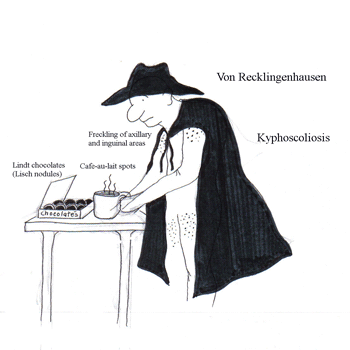
<p>•	 More than 6 café-au-lait spots measuring at least 15 mm in adults and 5 mm in children<br />
         (Café-au-lait spots are found in more than 50% of individuals with NF1.) <br />
•	At least 2 or more neurofibroma of any type or at least 1 plexiform neurofibroma <br />
•	Freckling in the axillary or inguinal regions <br />
•	Optic glioma <br />
•	Two or more Lisch nodules (iris hamartomas)  (VonRecklingenhausen is eating Lindt chocolates) <br />
•	A distinctive bony lesion, such as sphenoid wing dysplasia or thinning of a long bone with or <br />
        without pseudoarthrosis <br />
•	A first-degree relative with NF1, as suggested by these criteria</p>

<p><img alt="VonReckingenhausenART2.gif" src="http://www.medmemoweb.com/VonReckingenhausenART2.gif" width="350" height="350" /></p>

<p></p>

<p>SIGNS</p>

<p>•	spinal deformities: scoliosis and kyphoscoliosis.<br />
•	congenital bowing and pseudoarthrosis of the tibia and the forearm.<br />
•	overgrowth phenomenon of the extremity.<br />
•	soft tissue tumors</p>

<p>TREATMENT</p>

<p>•	Plastic surgery to correct disfigurement<br />
•	Surgical treatment of intraspinal or intracranial tumors, and tumors of the peripheral nerve</p>]]>
</content>
</entry>

</feed>